No products in the cart.
Quick answer
A duct inspection looks for issues that may affect air delivery
A professional may review accessible ductwork, registers and returns, then measure airflow or system conditions if the concern calls for it. The exact scope varies. An inspection is not automatically a duct cleaning, a full HVAC tune-up, or a whole-home energy audit—ask what is included before the visit.
If some rooms feel stuffy, airflow seems weak, or you have visible duct damage, an inspection can help clarify what is happening. Knowing the usual steps—and what to ask about optional tests—makes it easier to understand the findings and decide what work, if any, to approve.
Set the scope
Before the inspection, describe the problem
The technician will often ask why you scheduled the visit: uneven temperatures, weak airflow, unusual noise, dust concerns, a recent renovation, or a suspected leak. Share which rooms are affected, when the issue occurs, whether it changes with heating or cooling, and any recent filter or equipment work. If uneven temperatures are your main concern, our guide to uneven temperatures between rooms and possible ductwork causes can help you track the pattern before the appointment.
Before booking, ask whether the appointment covers ductwork only or also includes the air handler or furnace, airflow measurements, a written report, and a repair estimate. Ask about the inspection fee, areas that may not be accessible, and whether any additional test requires separate approval.
A visual walkthrough
The technician checks registers and accessible ductwork
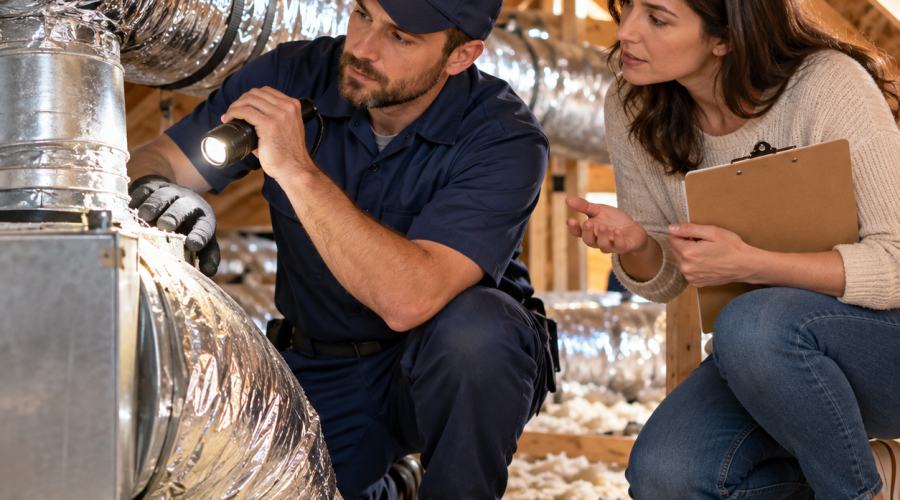
A walkthrough may include supply registers, return grilles, the filter location, and duct sections that can be reached safely. The technician may look for visible gaps, disconnected joints, crushed or kinked sections, damaged insulation, loose supports, or signs that a register or return is blocked.
Not every duct is visible or reachable, especially inside finished walls, ceilings, or floors. A visual check of accessible sections cannot confirm the condition of concealed ducts. The technician should explain what was inspected and what could not be accessed.
If your AC is running but not cooling, our guide to safe checks for an air conditioner that is not cooling covers the thermostat, filter, returns, and supply vents before you decide whether to request service.
Measurements, when relevant
Airflow checks help connect symptoms to system performance
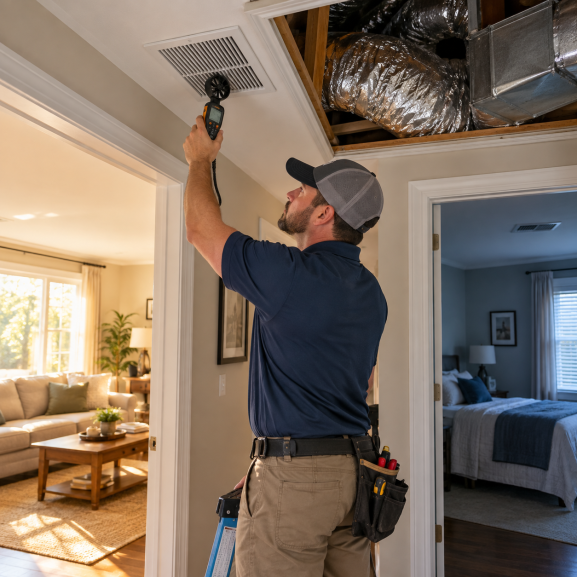
If the complaint involves weak airflow or uneven room temperatures, the technician may compare airflow at selected registers, check temperatures at supply and return locations, or measure system pressure. Which measurements are appropriate depends on the equipment, the concern, and the agreed scope.
Measurements are most useful when the technician explains what was tested, under what operating conditions, and how the result relates to the symptoms. A single reading at one vent may not explain a whole-home comfort problem by itself.
| Possible check | What it may help assess | What to ask |
|---|---|---|
| Visual review | Accessible duct condition, visible gaps, damage, insulation, and obstructions | Which sections were accessible, and can you show me the concern? |
| Airflow or temperature readings | Whether air delivery or room-to-room differences may relate to the complaint | Where did you measure, and what do the readings indicate in this case? |
| Pressure or leakage testing | System pressure conditions or leakage, when a specific diagnostic test is warranted | Is this included in the inspection fee? What result would change the recommendation? |
| Camera inspection | The interior of selected concealed or difficult-to-view sections | Which area will the camera cover, and will I receive the images? |
Not every test is routine
Leakage tests and camera inspections may be separate
A duct-leakage test, pressure test, or camera inspection may be useful for a particular concern, but these are not automatically part of every basic visit. Ask why the test is being recommended, what area or system it covers, what it costs, and how the result will guide the next step.
Likewise, duct inspection is not the same service as duct cleaning. Cleaning should not be added without a clear explanation of the scope, reason, and price. Request separate written descriptions and estimates for inspection, testing, cleaning, and repairs so you can compare them.
Review the results
A useful report explains findings and next steps
At the end, ask the technician to summarize what was inspected, any areas that could not be reached, and which observations or measurements support each recommendation. A written report with photos or readings can make it easier to compare estimates and keep a record for future service.
Recommendations may range from clearing an obstruction or correcting an accessible connection to further testing or a larger repair. Ask which items are urgent, which are optional, and what problem each proposed repair is intended to address. The inspection itself does not mean that cleaning or replacement is automatically necessary.
Questions to ask
Questions for the provider before and after the visit
- What exactly is included in the inspection, and what is an extra-cost test?
- Which duct sections and equipment components will you be able to access?
- Will you take airflow, temperature, pressure, or leakage measurements?
- Will I receive a written report, photos, or copies of the readings?
- Is duct cleaning or repair included, or would that require separate approval?
- Can you explain the evidence, price, and expected result for each recommendation?
- Are there any safety, access, or code issues that require another qualified professional?
Confirm the provider's services, qualifications, availability, fees, and service area directly with the business.
Keep the visit safe
What to do if there is an immediate warning sign
Do not enter an unsafe attic, crawlspace, or mechanical area to prepare for an inspection. Leave equipment panels, wiring, fuel lines, and internal dampers to qualified professionals.
Common questions
Professional duct inspection: FAQs
Is a duct inspection the same as duct cleaning?
No. An inspection evaluates accessible ductwork and may include measurements or tests, depending on the agreed scope. Cleaning is a separate service and should be explained and priced separately unless it is specifically included in writing.
Does every inspection include a camera or leakage test?
Not necessarily. These tests may be recommended for a particular concern or offered as separate services. Ask what the test covers, why it is appropriate, and whether it is included in the quoted fee.
How long does a professional duct inspection take?
Time varies with the home's size, system layout, access, and inspection scope. Ask the provider for an estimate based on your home and whether additional testing could extend the visit.
Should I be home during the inspection?
Ask the provider what access is needed and whether you should be present to describe symptoms or review findings. Do not enter restricted or unsafe spaces to help with the inspection.