No products in the cart.
Quick answer
Check only the simple, visible things
Confirm the thermostat is set to Heat, the set temperature is above the room temperature, and the fan is set to Auto. If it is safe to do so, check an easily accessible air filter and make sure vents are not blocked. Do not open furnace panels, relight a pilot, touch wiring, or reset a breaker. If you smell gas, a carbon monoxide alarm sounds, or you notice smoke, sparks or a burning electrical smell, stop and follow the emergency guidance below.
A furnace may fail to heat because of a thermostat setting or restricted airflow, but a no-heat problem can also involve gas, combustion or electrical components. This guide covers a few low-risk observations—not repairs. If anything feels unsafe, step away and contact the appropriate professional.
Start with the control
Confirm the thermostat is set to heat
Make sure the thermostat is set to Heat, not Cool or Fan Only, and raise the set temperature a few degrees above the current room temperature. Set the fan to Auto rather than On; with On selected, the blower can continue moving air between heating cycles.
If the thermostat is battery-powered and its display is blank or dim, check its manual and replace user-accessible batteries if needed. Review the schedule or hold setting in case it is overriding the temperature you selected. After changing a setting, give the system time to respond according to the thermostat or furnace manual.
A visible, low-risk check
Check the filter and make sure vents are clear
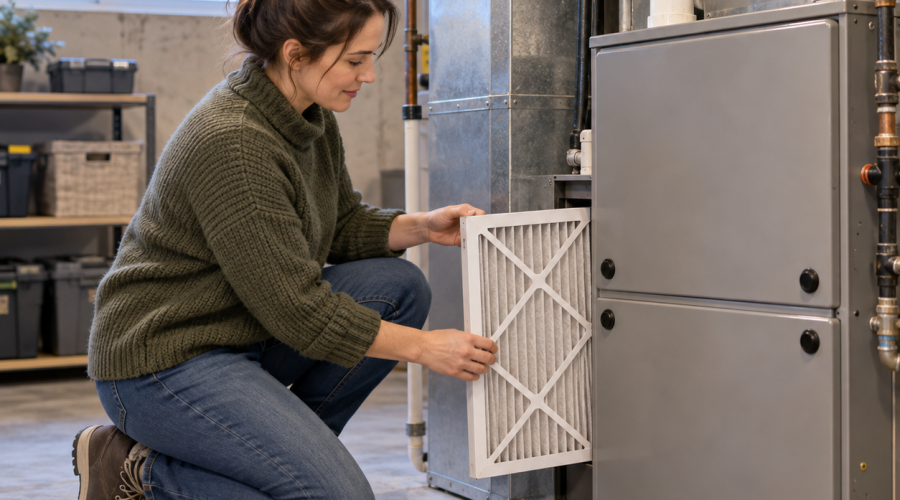
A heavily loaded air filter can restrict airflow and affect heating. If your filter is in a routine, homeowner-accessible slot, follow the furnace manual to inspect or replace it. Use the specified size and type, and install it in the marked airflow direction. Do not remove a furnace service panel to find a filter or reach internal parts.
Check that supply vents and return grilles are not covered by furniture, rugs or curtains. Leave the registers in their normal open position; closing several vents can interfere with airflow rather than fix the problem.
Observe without opening equipment
Allow for the furnace’s normal start-up cycle
Some furnaces take a short time to start delivering warm air after the thermostat calls for heat. The blower may also continue briefly after a heating cycle ends. These delays can vary by equipment, so use the owner’s manual for what is normal for your model.
From the room, note whether the thermostat shows a call for heat, whether air is coming from the vents, and whether the furnace starts and stops repeatedly. Do not remove covers or try to interpret internal indicator lights. If the air remains cool beyond the normal start-up period, the furnace does not respond, or it repeatedly shuts down, arrange professional service.
Safety comes first
Know when to stop and get out
If you smell gas, leave immediately
Do not operate lights, the thermostat, appliances or other switches, and do not use a phone inside. Do not light a flame or try to find the leak. Get everyone out, then call 911 or your gas utility’s emergency number from a safe location outside and away from the building. Do not re-enter until responders say it is safe.
Carbon monoxide alarm or possible symptoms?
If a CO alarm sounds—or anyone has a headache, dizziness, nausea, weakness or confusion—move everyone and pets outdoors immediately. Call 911 or local emergency services from outside. Do not re-enter until authorities say it is safe, and do not try to locate the source yourself.
Smoke, sparks, a burning electrical smell, or a tripped breaker are reasons to stop troubleshooting. Do not open the furnace, touch wiring, or reset a breaker. Move away; if there is smoke or fire, evacuate and call emergency services. Otherwise, contact a qualified HVAC technician or electrician for direction.
Describe what you notice
Furnace symptoms and sensible next steps
These observations do not identify the cause, but they can help you explain the issue when you call for service.
| What you notice | A sensible next step |
|---|---|
| Thermostat display is blank or dim | Check the thermostat manual. Replace its user-accessible batteries if applicable; if it remains blank, arrange service. |
| Thermostat calls for heat, but nothing starts | Confirm the mode and set temperature once. Do not open the furnace or reset a breaker; contact a professional if it still does not respond. |
| Air moves but does not feel warm | Set the thermostat fan to Auto and allow for the normal start-up period in the manual. If it persists, call for service. |
| Furnace starts and stops repeatedly | Check only the accessible filter and blocked vents. If the cycling continues, stop troubleshooting and request an inspection. |
| Gas odor, CO alarm, smoke, sparks or burning electrical smell | Stop. Follow the emergency instructions above; do not inspect, reset or repair the equipment yourself. |
Bring in a qualified technician
When should you call for furnace service?
Arrange a professional inspection if the thermostat and basic airflow checks do not restore heat, the furnace will not start, it repeatedly shuts down, or you notice unusual sounds or performance. Any concern involving gas, combustion, wiring, a breaker or internal parts belongs with a qualified professional—not a DIY repair.
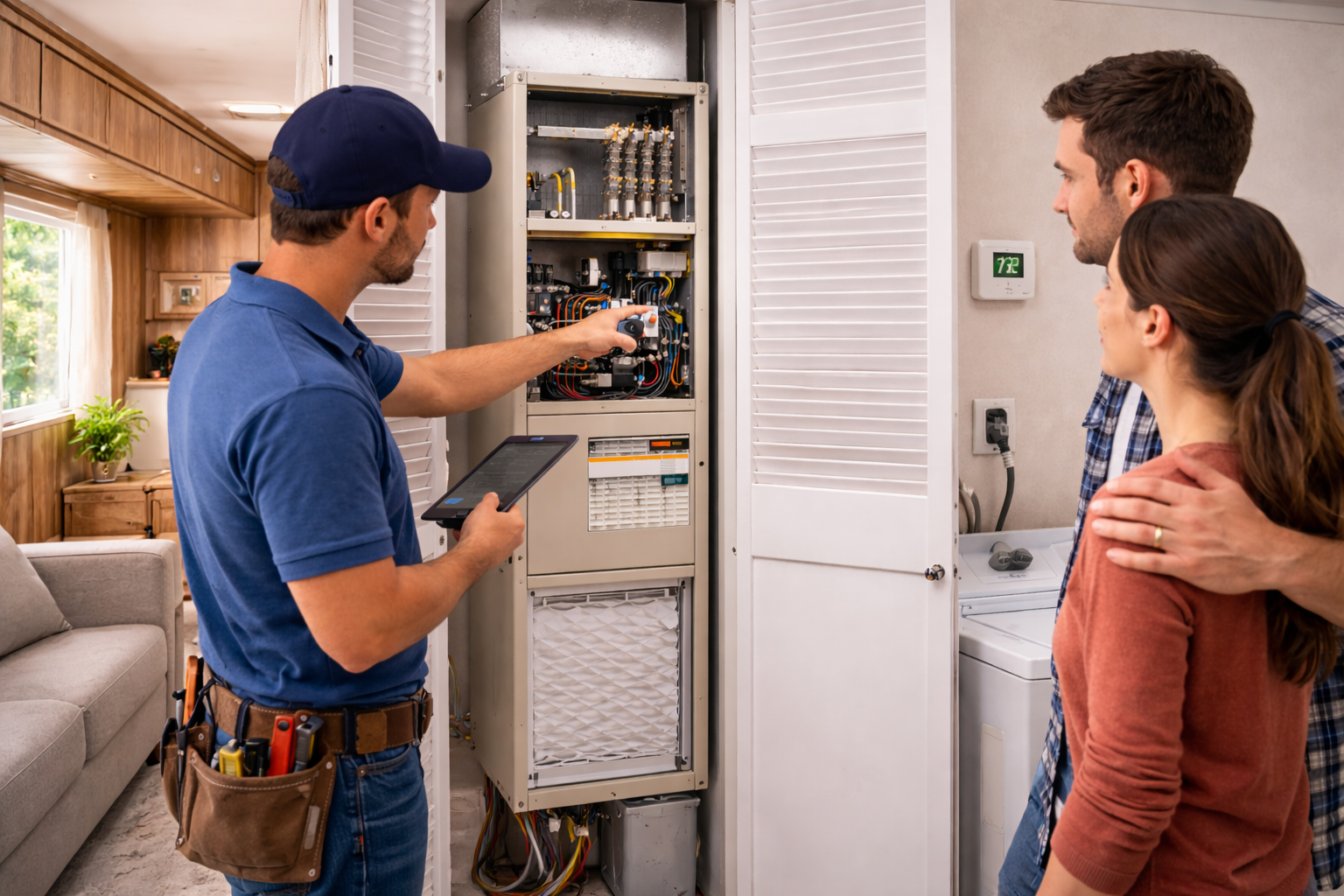
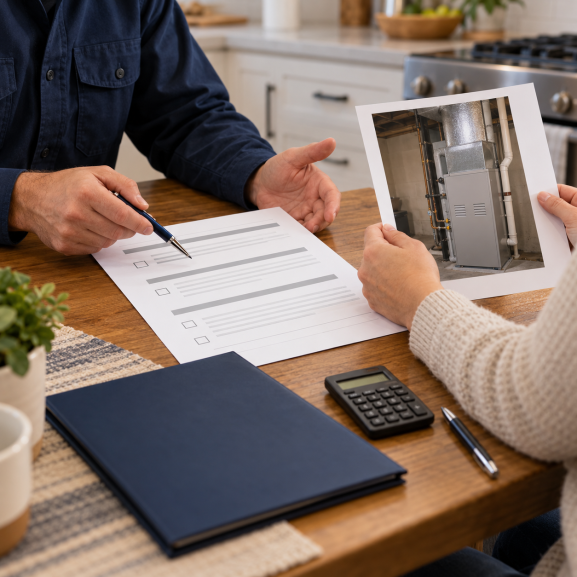
When you call, share the furnace make or model if you can find it without opening the equipment, what the thermostat displays, what you observe at the vents, when the problem began, and any safety warning signs. Ask whether the provider serves your address, what the visit or diagnostic fee is, and when they can come.
Explore ABV for local HVAC service listingsConfirm the provider’s services, credentials where applicable, availability, fees and service area directly with the business. If there is an immediate gas, CO or fire emergency, contact emergency services instead of browsing for a contractor.
Common questions
Furnace not heating: FAQs
What should I check first if my furnace is not heating?
Confirm the thermostat is set to Heat, the set temperature is above the room temperature, and the fan is set to Auto. If the filter is in a normal homeowner-accessible slot, check it using the equipment manual and make sure vents are not blocked. Do not open furnace panels or handle gas or electrical parts.
Can a dirty filter stop a furnace from heating?
A heavily restricted filter can affect airflow and system operation. Check or replace only a filter that is designed for routine homeowner access, following the manual. If the furnace still does not heat, contact a technician.
Should I relight the furnace pilot myself?
This guide does not recommend relighting a pilot. Do not attempt it if you smell gas, are unsure of the equipment, or the manufacturer’s instructions are not clear. Contact a qualified professional; if you smell gas, leave immediately and call from a safe location.
What should I do if my carbon monoxide alarm goes off?
Get everyone and pets outdoors immediately and call 911 or local emergency services from outside. Do not re-enter until authorities say it is safe, and do not try to locate the source yourself.

Pingback: What Do Different Furnace Noises Mean? - ABV
Pingback: What Happens During a Furnace Tune-Up? A Homeowner’s Guide - ABV
Pingback: Furnace Smells: Which Odors Need Immediate Action? - ABV