No products in the cart.
Quick answer
Start by identifying the symptom
If air is barely coming from the vents, start with the filter, return grilles and supply vents. If airflow is strong and the air feels warm, check the thermostat and whether the outdoor unit is running. If the vents feel cool while the rooms stay warm, the problem may involve ductwork, heat entering the home or the equipment itself. Stop troubleshooting if you see ice, smell burning, hear unusual electrical sounds, find water near electrical parts, or the system keeps tripping a breaker. In those cases, contact a qualified HVAC professional.
A running fan does not prove that the cooling cycle is working. The checks below are written for a typical central split or ducted system. Window, portable and mini-split units can use different controls, so follow the manual for your model. You can inspect settings, airflow and visible conditions without opening panels, touching wiring or handling refrigerant.
01
Check the thermostat first
Make sure the thermostat is asking for cooling
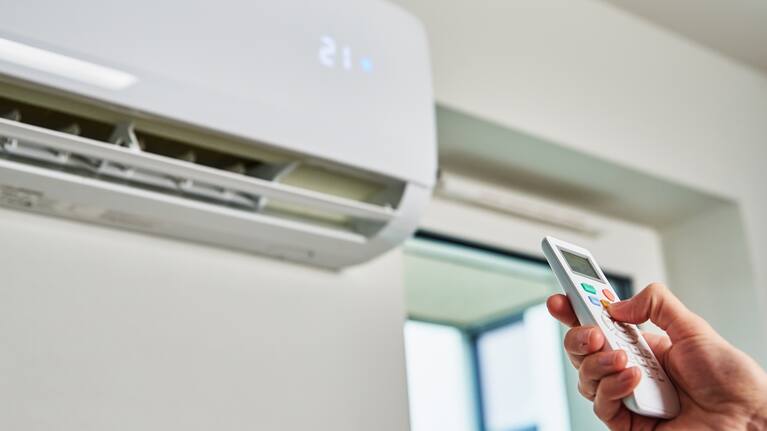
Set the thermostat to Cool, not Heat or Fan Only, and choose Auto for the fan. Set the target a few degrees below the current room temperature. A fan set to On can keep moving room-temperature air between cooling cycles, which may make a working system feel warmer than it is. If the display is blank, shows an error or uses batteries, check the power or battery instructions in the system manual.
After changing a setting, wait through a complete cycle before making another adjustment. If the indoor temperature keeps rising or the outdoor unit never starts, note what you observe and continue with the safe checks below.
02
Check airflow before touching equipment
Inspect the filter, returns and supply vents
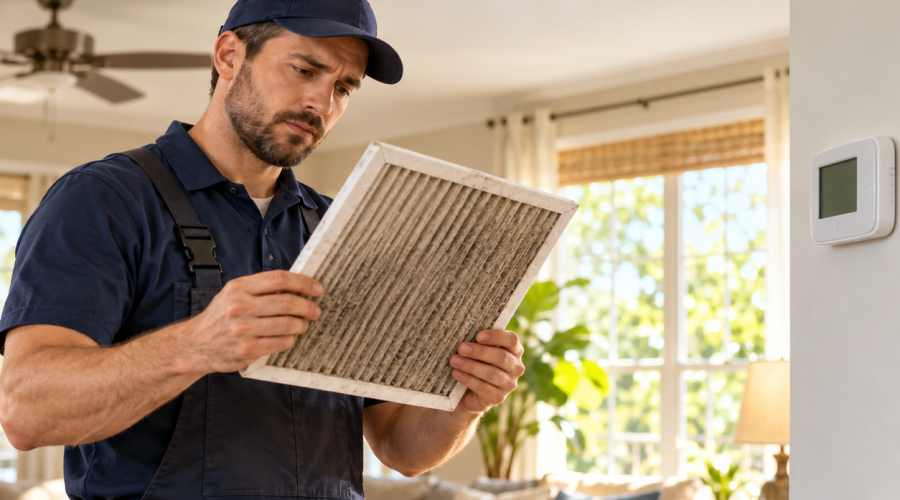
A loaded filter can reduce airflow and contribute to poor comfort or a frozen coil. Turn the system off at the thermostat before removing the filter. Note the airflow arrow, compare the size and type with the equipment manual, and install only the filter specified for your system. During heavy-use months, ENERGY STAR recommends checking the filter monthly, but the correct replacement interval depends on the equipment and the home.
Make sure return grilles are not covered by furniture, rugs or curtains, and keep supply vents open. If one room is warmer than the rest, note which room is affected and whether the pattern changes with the time of day. Closing several vents to force air elsewhere can upset the system’s airflow, so that is not a reliable fix.
If the filter is wet, the coil is iced or airflow is much weaker than usual, stop at this point and arrange service. The cause may involve drainage, airflow or the cooling system itself.
03
Observe from outside
Check the outdoor unit without opening it
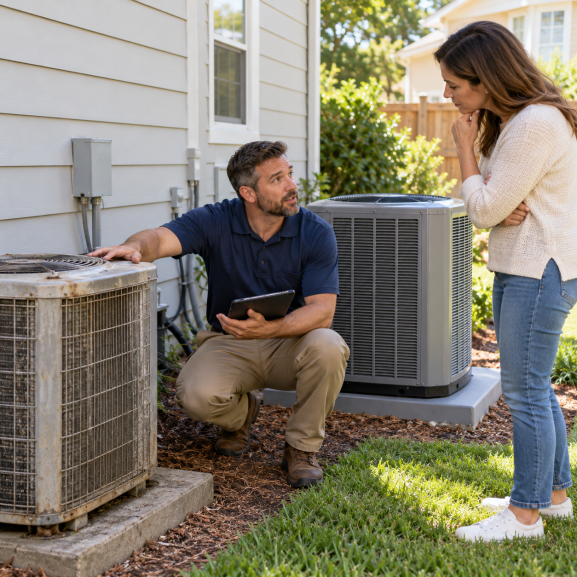
With the thermostat calling for cooling, look at the outdoor unit from a safe distance. Check whether the fan is running and whether leaves, grass or loose debris are crowding the cabinet. Keep the area clear according to the manufacturer’s instructions.
Do not remove a panel, reach through the grille, spray electrical parts or attempt wiring repairs. If the indoor blower runs while the outdoor unit is silent, repeatedly clicks, hums without starting, has a damaged cable or trips a breaker, turn the system off if you can do so safely and arrange professional service.
A heavily blocked outdoor coil can reduce the system’s ability to release heat. Cleaning may require safe power isolation and care around fins and wiring. Avoid pressure-washing or any task that puts you near electrical components.
04
Treat these as stop signs
Watch for ice, water, burning smells or unusual noise
Ice on a refrigerant line or around the indoor coil can result from restricted airflow or a fault in the cooling system. Turn cooling off at the thermostat. Do not chip away the ice or keep running the system to force it clear. Water around the indoor unit may follow a frozen coil or a condensate problem; keep away from electrical equipment and arrange service.
A burning smell, smoke, buzzing, sparking, damaged wiring or repeated breaker trips calls for immediate caution. If there is smoke or a fire risk, leave the area and contact emergency services. For other electrical symptoms, leave the system off and call a qualified technician.
Keep sealed and electrical parts closed
Capacitors can retain a dangerous electrical charge. Refrigerant and internal electrical work require training, proper tools and the certifications required in your jurisdiction. Keep troubleshooting to controls, filters, vents and visible conditions.
05
Match the symptom to the next step
What the system is doing can narrow the cause
These clues do not confirm a diagnosis; they help you decide where to stop and give a technician a clearer description of the problem.
| What you notice | A sensible next step |
|---|---|
| Weak airflow from several vents | Check the filter and confirm vents are open. If airflow stays weak, request a system inspection. |
| Indoor fan runs while air feels warm | Confirm the thermostat setting and check whether the outdoor unit is running from a safe distance. |
| Outdoor unit is silent while the indoor fan runs | Turn cooling off if needed and arrange professional service. Do not open the cabinet. |
| Cool air comes out while one room stays warm | Check for blocked vents or returns and note the time and conditions. Persistent imbalance may involve ductwork or the home’s heat load. |
| The system runs for a long time without lowering the temperature | Check the filter, thermostat and visible outdoor clearance. If the problem continues, request an inspection rather than lowering the set point repeatedly. |
| Ice on a line or indoor equipment | Turn cooling off and ask an HVAC professional what to do next. |
| Breaker trips again after being reset | Leave it off. Do not keep resetting it; arrange qualified service. |
06
Know when to bring in help
When should you call an HVAC professional?
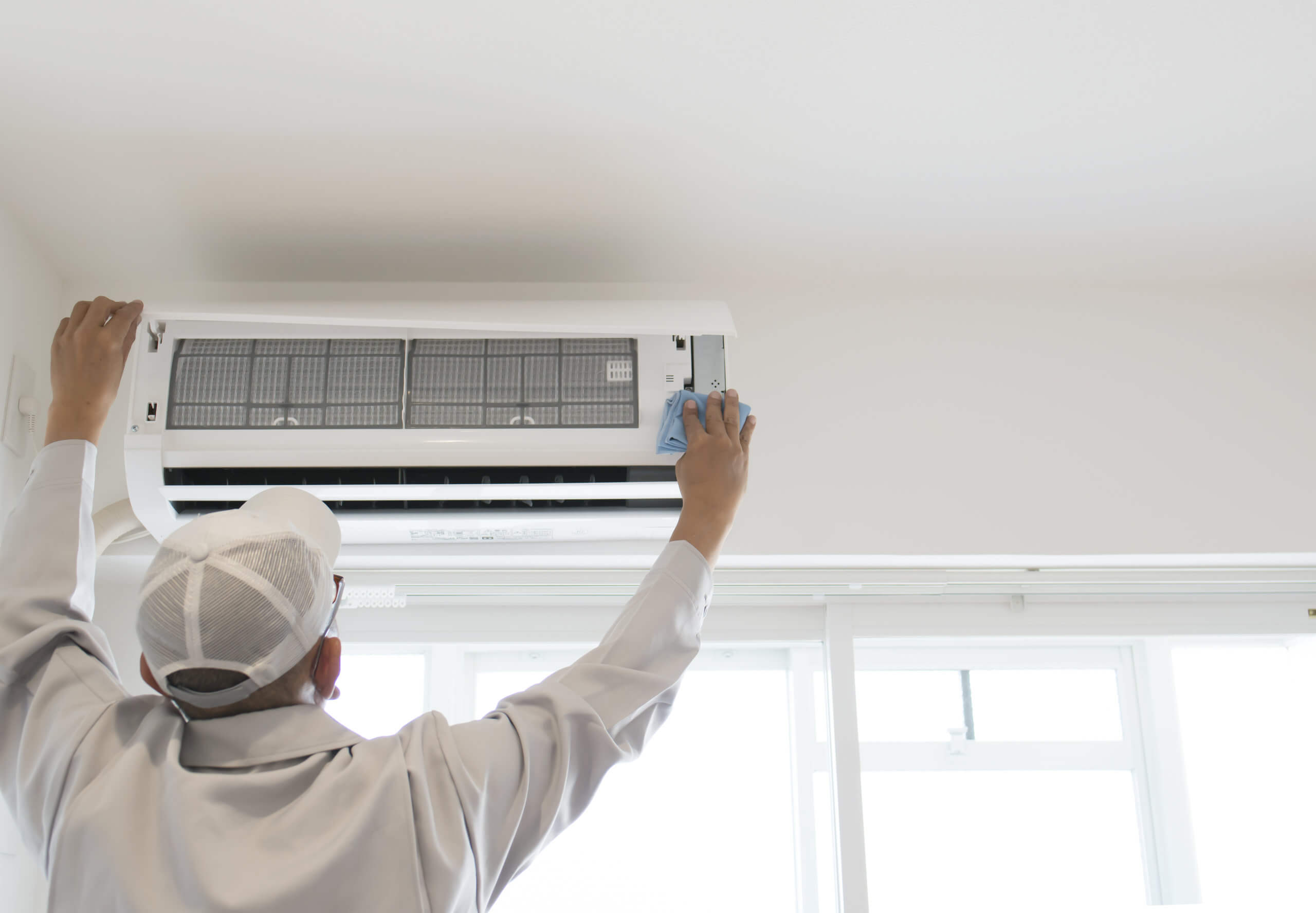
Arrange service if the safe checks do not restore cooling, the outdoor unit will not run, the system repeatedly shuts off, or you see ice, water near equipment, damaged wiring, unusual electrical symptoms or signs of a refrigerant problem. If the home is becoming dangerously hot, move people or pets who may be vulnerable to heat to a cooler location while you arrange help.
When you call, share the system type or model if known, the thermostat setting and display, whether the indoor and outdoor units run, the symptom pattern, what you have already checked and when the problem began. Ask about the diagnostic fee, arrival window, service area and whether the proposed visit covers electrical or refrigerant-related diagnosis.
Browse air-conditioning service listingsA directory listing is a starting point. Confirm services, current availability, credentials where applicable, fees and the service area directly with the business.
FAQ
Common questions
AC not cooling: FAQs
Why is my AC blowing air but not cooling?
Possible causes include the thermostat setting, restricted airflow, a problem at the outdoor unit, low refrigerant or an electrical fault. Check the thermostat, filter and visible vents first. If airflow is strong while remaining warm, arrange a professional diagnosis.
Why is my AC running constantly but the house is still warm?
Extreme outdoor heat can lengthen a cooling cycle, while a room that keeps getting warmer may have a loaded filter, blocked outdoor unit, ductwork problem, low refrigerant or equipment fault. Complete the safe checks once, then arrange service if the temperature does not improve.
Should I turn my AC off if it is not cooling?
Turn cooling off if you see ice, smell burning, hear unusual electrical noises, find water near electrical equipment or the breaker trips repeatedly. For less urgent symptoms, follow the equipment manual and contact a technician if the safe checks do not help.
Can a dirty air filter make the AC stop cooling?
Yes. A loaded filter can restrict airflow and reduce comfort, and restricted airflow can contribute to coil icing. Replace it with the specified size and type. If cooling does not improve, have the system checked.
Can I add refrigerant to my AC myself?
Do not open the sealed system or add refrigerant yourself. A low charge usually indicates a leak or another fault that needs diagnosis. In the United States, stationary AC refrigerant service is covered by EPA Section 608 certification requirements.
Is it safe to reset the AC breaker?
A breaker that trips repeatedly may signal an electrical problem. Do not keep resetting it. Leave it off and contact a qualified HVAC professional or electrician as appropriate.
Why is one room warmer than the others?
Blocked vents or returns, ductwork problems, sunlight, insulation and the home’s heat load can all play a role. Note when the room is warm and check that its vents are unobstructed. If the pattern persists, ask a professional to assess airflow and ductwork.