
No products in the cart.
Quick answer
There is no single best system for every New York home
A heat pump, a furnace, or a dual-fuel system may be worth considering depending on your local winter conditions, the home's heat loss, existing ducts and electrical service, local utility rates, and installation quotes. Compare options using your home and energy bills—not a statewide rule of thumb.
“Heat pump vs. furnace” is not a one-size-fits-all decision in New York. A home in the city, on Long Island, or in a colder inland area can have different heating needs, and two houses on the same street can need different equipment. This guide explains the factors to compare before you request proposals.
Start with the basics
How a heat pump and a furnace provide heat
An air-source heat pump moves heat between the outdoors and indoors using a refrigeration cycle. In heating mode, it collects heat from outdoor air and transfers it inside. Many heat pumps can reverse direction to provide cooling in summer, though the exact features depend on the system.
In this guide, “furnace” means a fuel-burning furnace—typically natural gas, oil, or propane—that heats air and distributes it through ductwork. An electric resistance furnace is a different comparison. Fuel type, venting needs, and equipment efficiency vary by model. A dual-fuel system pairs a heat pump with a fuel-burning furnace and uses controls to determine when each should run.
Think beyond the state label
New York has more than one winter profile
New York City and Long Island generally have different winter conditions from many colder inland and northern communities. Local elevation, wind exposure, the home's insulation, and the temperature used for equipment design also matter. A broad claim that one system is right for all of New York can miss those differences.
Cold-climate heat pumps are designed to operate in colder weather, but their heating capacity and efficiency vary by model and outdoor temperature. Ask for performance data at the outdoor temperatures relevant to your location, not only the unit's advertised minimum operating temperature. A system that can run in very cold weather may still need supplemental heat if it cannot meet the home's full design load on its own.
Furnaces also need to be selected for the home's heating load and distribution system. Ask the contractor to explain the design assumptions, expected output, and backup plan for the coldest conditions the home is designed to handle.
Look at the existing house
Ducts, insulation and electrical capacity can change the project
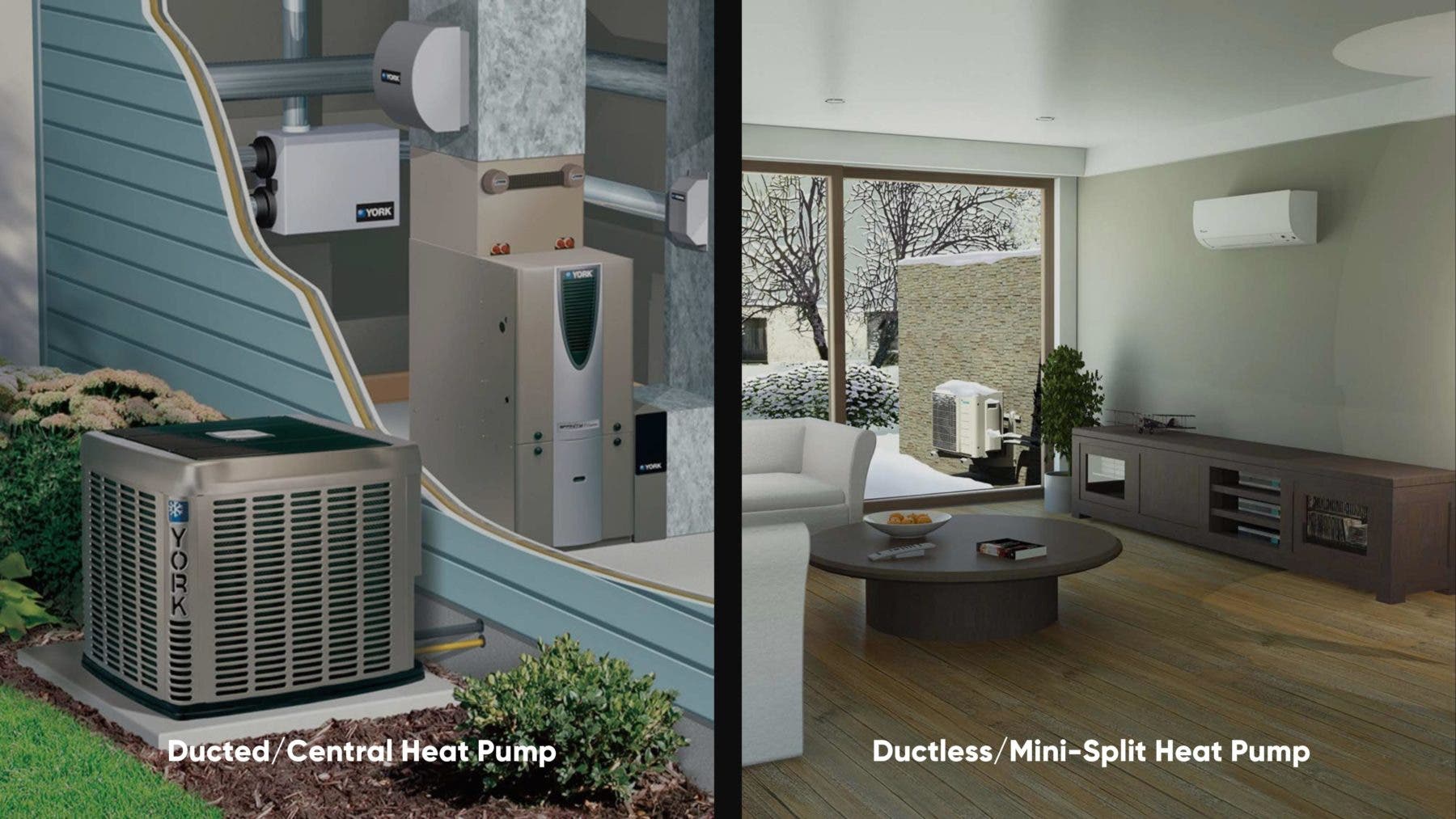
A ducted heat pump may be able to use existing ductwork if it is compatible and properly sized. A ductless mini-split can be an option for homes without ducts or for additions and rooms that are hard to heat, but it may not be the right layout for every home. A furnace replacement may also require duct repairs, venting work, or fuel-line checks.
Before comparing quotes, ask whether the electrical panel and wiring can support the proposed heat pump, whether the outdoor unit has a suitable location, and whether air sealing or insulation improvements should be considered. These items can affect both the installation price and how well either system performs.
Use local numbers
Compare installation cost and annual energy cost separately
The cheapest installation is not always the lowest-cost option over time, and an efficiency label alone cannot predict a household's bill. Heat-pump operating costs depend on electricity rates and performance as outdoor temperatures change; a heat-pump COP or seasonal rating describes efficiency under specified conditions. Furnace costs depend on the fuel, its price, the unit's AFUE rating, and how the system distributes heat.
Ask each contractor to show the assumptions behind any annual-cost estimate: your home's heating load, equipment model, local utility rates, fuel prices, and expected backup use. Compare the full project too, including electrical upgrades, duct or vent work, cooling equipment, maintenance, and any applicable incentives. Program rules and eligibility can change, so verify current offers with official state, utility, and tax-program sources before budgeting.
| Factor | Heat pump | Furnace |
|---|---|---|
| Energy cost | Estimate electricity use using local rates and performance across the heating season. | Estimate fuel use using local prices and the equipment's rated efficiency. |
| Cold-weather plan | Check capacity at local design temperatures and identify when supplemental heat may run. | Confirm the selected unit and fuel supply can meet the home's design load. |
| Home modifications | Check panel capacity, wiring, outdoor placement, and duct or indoor-unit design. | Check fuel connections, venting, duct condition, and combustion-air requirements. |
| Cooling | Many models can provide cooling; confirm the proposed system's configuration. | A furnace needs separate cooling equipment if central air conditioning is wanted. |
Consider everyday use
Comfort, cooling and emissions are also part of the choice
Heat pumps and furnaces can feel different in operation. A heat pump may run for longer periods and deliver air that feels less hot than air from a furnace; comfort depends on correct sizing, airflow, controls, and the home's envelope. Ask how the proposed system is expected to operate during mild weather and cold snaps.
If replacing air conditioning is also part of the project, compare cooling performance and room-by-room comfort alongside heating. Environmental impacts depend on the fuel being replaced, the equipment's real-world performance, and the electricity supply. Avoid assuming that one label alone describes the impact of every system in every home.
Plan for safe upkeep
Maintenance and safety depend on the equipment
Both systems need maintenance appropriate to the manufacturer's instructions. Heat pumps have filters and outdoor equipment that need routine attention; furnaces have fuel-burning and venting components that should be checked by a qualified professional. Ask what maintenance is required, what is included in a service visit, and which tasks are safe for a homeowner.
Match the system to your priorities
When might each option be worth pricing?
These are starting points for comparing proposals, not a substitute for a home assessment:
- A heat pump may be worth a quote if you are replacing cooling equipment too, want to compare electric heating, or have a home and electrical setup that can support the proposed system.
- A furnace may be worth a quote if your home already has compatible fuel service and ductwork, or if a heat pump project would require substantial electrical or distribution changes. Compare the full installed and operating costs.
- A dual-fuel option may be worth exploring if you want a heat pump for some conditions while retaining a furnace for backup or colder periods. Ask how the changeover point is selected and how often each system is expected to run.
The right comparison is between correctly sized, fully specified proposals for your house—not between generic technology labels.
Get comparable proposals
Questions to ask before choosing a system
- Will you calculate the home's heating load and explain the assumptions?
- What capacity will the proposed equipment deliver at my local design temperature?
- When will supplemental or backup heat operate, and how is that controlled?
- Do the ducts, electrical panel, wiring, fuel connections, and venting need work?
- Can you estimate annual energy use using my utility rates and recent bills?
- Which maintenance, warranty, service-area, and incentive details should I verify?
Confirm each provider's qualifications, services, availability, fees, and service area directly with the business. Incentive eligibility should be checked with the relevant official program.
Common questions
Heat pump vs. furnace in New York: FAQs
Can a heat pump heat a home in upstate New York?
Cold-climate heat pumps are designed for colder conditions, but performance and available capacity vary by model, outdoor temperature, and home. Ask for model-specific capacity data at your local design temperature and a clear plan for any supplemental heat.
Is a heat pump cheaper to run than a gas furnace in New York?
It depends on the home's heat loss, equipment performance, local electricity and gas rates, and how often backup heat runs. Ask for a side-by-side estimate based on your home's load and actual utility rates rather than relying on a general statewide answer.
At what temperature does a heat pump stop working?
There is no single cutoff for every heat pump. Check the specific model's operating range and, more importantly, its heating capacity and efficiency at the outdoor temperatures relevant to your home.
Can I keep my furnace and add a heat pump?
Some homes can use a dual-fuel arrangement, but compatibility, controls, installation cost, and expected operating savings need to be evaluated by a qualified contractor.
Are New York heat pump incentives available?
Programs, funding, eligibility, and deadlines can change. Check current information with NYSERDA, your utility, and relevant official tax-program sources before including an incentive in your budget.


Pingback: What Should a Furnace Replacement Estimate Include? - ABV
Pingback: Ducted vs. Ductless Heat Pumps in New York: How to Compare - ABV
Pingback: How Much Does It Cost to Run a Heat Pump? Factors to Compare - ABV