No products in the cart.
Boiler and radiator systems
Steam and hot-water radiators can look similar, and the number of pipes at one radiator is not always enough to identify the system. A few visible clues can help you understand what is in your home, but a technician or the boiler's documentation can confirm it.
First, how the two systems move heat
A steam boiler heats water until it becomes steam. The steam travels through the distribution pipes to radiators, gives up heat as it condenses, and the resulting water returns toward the boiler. Depending on the design, a radiator may have one pipe connection or separate supply and return connections.
A hot-water boiler heats water that circulates through radiators or other emitters and then returns to the boiler to be heated again. Many systems use a circulator pump; some older installations rely on gravity flow. Hot-water systems are closed loops, though the exact piping and radiator styles vary.
If you are still determining whether your home uses a boiler or a furnace, start with our guide to identifying your heating system. This article focuses on the radiator side of the system.
Visible clues around a radiator
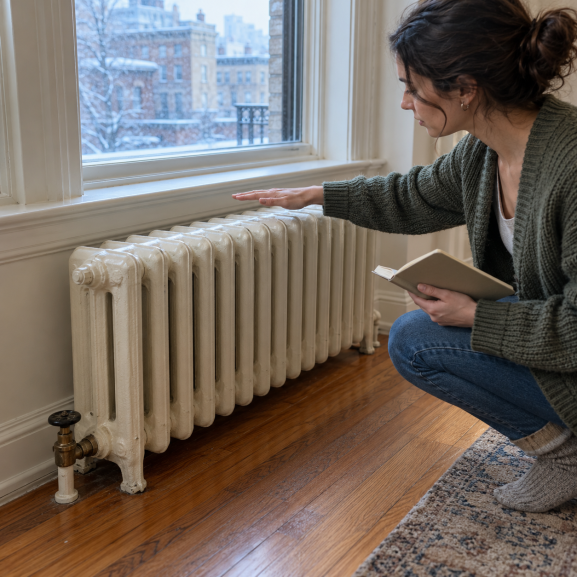
Look only at the exposed parts of a radiator when the system is off and cool. Do not remove covers, turn valves, loosen fittings, or touch a radiator that may be hot. These clues are useful observations, not a substitute for identifying the boiler and piping configuration.
| Clue | Steam system | Hot-water system |
|---|---|---|
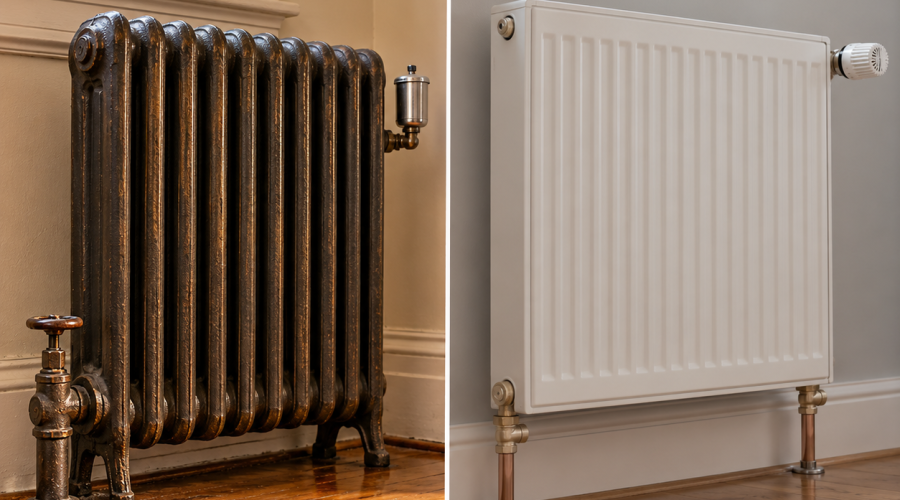
| Pipes at the radiator | A one-pipe steam radiator commonly has one larger pipe connection. Two-pipe steam systems also exist. | Many radiators have a supply and a return connection, though layouts can vary and pipes may be concealed. |
| Small fitting on the radiator | A one-pipe radiator often has an air vent on the side. Other steam designs may use different arrangements. | A radiator may have a small manual air bleeder near the top, but not every hot-water emitter looks the same. |
| How heat arrives | Steam enters and condenses inside the radiator; the system often heats in cycles. | Heated water circulates through the radiator and returns to the boiler. |
| Sounds | A vent may hiss briefly as air moves. A sound by itself does not confirm the system type or condition. | Water movement can sometimes be audible. Noise alone is not a reliable way to identify the system. |
Pipe count is a clue, not a verdict: two-pipe steam exists, and some piping can disappear into floors or walls. Likewise, the presence of a small valve or vent should not be tested by opening it.
What the operating differences may feel like
Steam systems typically deliver heat in boiler cycles, so radiators may warm and cool as steam is produced and condenses. A hot-water system circulates heated water through its loop, which can create a steadier pattern while the boiler and circulator are operating. Thermostat settings, building insulation, radiator size, and system controls all affect what you notice.
Neither system is automatically the better fit for every home. Existing piping, the building's layout, equipment condition, and the homeowner's goals matter. For a broader overview of boiler equipment and heating choices, see how to prepare a New York home for heating season.
How to confirm your radiator system
- Find the boiler model plate or the most recent service paperwork, if it is accessible without opening equipment panels.
- From a safe distance, note how many pipes are visibly connected to a radiator and whether there is an exposed vent or bleeder.
- Write down any system labels or terms in the paperwork, such as steam, one-pipe, two-pipe, hot water, or hydronic.
- Ask a qualified heating technician to confirm the system from the boiler and full piping layout, especially before arranging service or renovation work.
This is identification only, not a repair checklist. Do not bleed a radiator, adjust an air vent, operate a boiler valve, or remove a cover based on an online description. If you smell gas or a carbon-monoxide alarm sounds, leave the building and contact emergency services or the gas utility from a safe location.
Frequently asked questions
Does one pipe always mean steam?
No. One pipe is common on one-pipe steam radiators, but a visible pipe count alone is not conclusive. Concealed connections and less common layouts can make identification harder.
Is a radiator air vent the same as a bleeder?
They serve different roles in different system designs. A steam radiator often has an air vent; a hot-water radiator may have a manual bleeder. Do not open or adjust either one to identify the system.
Can the boiler tell me which radiator system I have?
The boiler label and service documents can help, but the piping and controls also matter. A qualified technician can confirm how the components work together.