No products in the cart.
Air conditioner troubleshooting
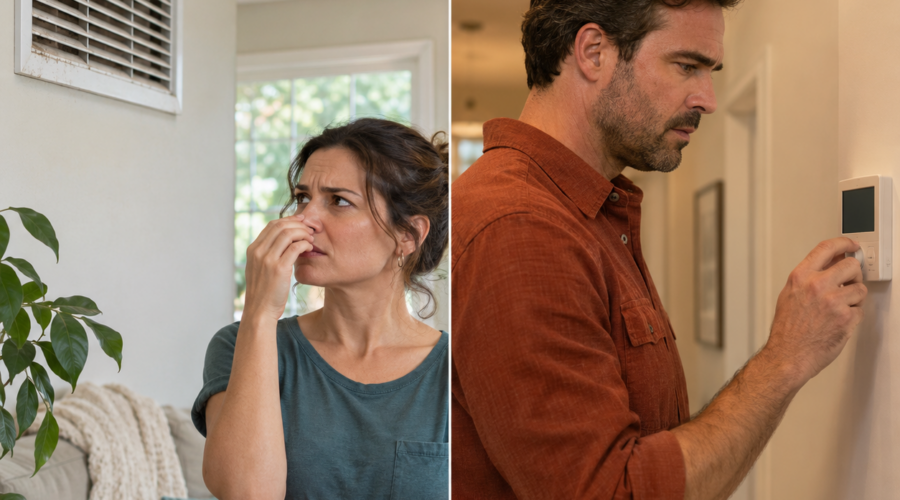
A musty odor and a burnt or hot-plastic smell call for different responses. Either one is a clue, not a diagnosis: moisture, airflow, electrical parts, or another source may be involved. Use the type and timing of the smell to decide whether to stop the AC, leave the area, or arrange an inspection.
Notice what the smell is like and when it happens
Try to describe the odor from a normal distance without leaning into a vent or approaching the equipment. Note whether it is damp or earthy, sharp or chemical, or similar to hot plastic or electrical insulation. Record whether it appears at startup, continues during operation, comes from one room, or is present throughout the home.
A short-lived odor at startup does not, by itself, prove a part has failed. A strong, recurring, or worsening smell deserves attention, and smoke, sparks, visible damage, or repeated breaker trips require a more urgent response.
Musty or damp smell: check for moisture, not a presumed diagnosis
A musty or earthy odor can be associated with retained moisture around a filter, coil, drain pan, or duct surface. Other sources elsewhere in the home can smell similar. The odor alone cannot confirm mold, identify a dirty component, or show that duct cleaning is needed.
If you can do so without opening equipment, note whether there is visible water near the indoor unit, a damp user-accessible filter, or an unusual change in airflow. Switch the AC off if water is pooling or leaking indoors, and keep away from wet electrical components. Follow the equipment manual for any user-accessible filter check; see our guide to choosing an HVAC filter.
If the smell is strongest at one vent or seems to come from inside the duct system, a professional can inspect the equipment and ductwork before recommending cleaning. Our article on what happens during a professional duct inspection explains the kinds of questions to ask.
How the odor pattern can guide your next step
| What you notice | What it may suggest | A safe response |
|---|---|---|
| Musty or damp smell from several vents | Moisture or a maintenance issue may be present in the filter, indoor equipment, drain area, or ductwork. | Look only for visible moisture or an accessible filter issue. Arrange an inspection if the odor persists or returns. |
| Musty smell with water or a wet ceiling | A condensate or building-water issue is possible; the odor alone cannot identify the source. | Turn cooling off if water is leaking indoors. Keep clear of electrical parts and contact HVAC service or building maintenance. |
| Hot-plastic or electrical smell while the AC runs | An overheating or electrical problem is possible, but smell alone cannot identify a component. | Stop using the AC and request qualified service. Do not open the unit or reset a breaker repeatedly. |
| Smoke, sparks, scorching, or a breaker that trips again | An immediate electrical or fire hazard may be present. | Keep away. Leave if there is smoke or fire risk and contact emergency services; do not approach the equipment to disconnect it. |
| Odor continues after the AC is off | The source may be another appliance, wiring, plumbing, or material in the room. | Do not assume the AC is responsible. If the smell is strong or suggests smoke or burning, move to safety and seek appropriate help. |
What not to do
- Do not keep running the AC when a strong or recurring burnt smell is present.
- Do not open the air handler, touch wiring, reach near a fan, or try to identify an electrical fault by smell.
- Do not pour bleach or drain chemicals into the equipment, spray fragrance into the return, or use an ozone device to mask an odor.
- Do not assume musty smell means mold, or that an air freshener or duct cleaning will fix the source.
- Do not repeatedly reset a breaker that trips. Leave it off and arrange qualified service.
If the AC also has weak airflow or fails to cool, describe those symptoms separately. Our guide to an AC that runs but does not cool covers that different problem.
When to call for service
Request an HVAC inspection if a musty smell keeps returning, there is unexplained moisture, the odor comes from several vents, or cooling and airflow have changed. Stop using the AC and seek qualified service for a persistent burnt or hot-plastic smell, unusual buzzing, visible damage, or repeated breaker trips. If smoke, sparks, or fire danger is present, leave and contact emergency services.
When you call, describe the odor without guessing at a failed part, when it appears, where it is strongest, how long it lasts, whether the AC was running, and any water, airflow, or electrical symptoms. Ask what the diagnostic visit covers and whether the company services your equipment type. Our checklist on what to ask before hiring an AC repair contractor in New York can help you prepare.
Frequently asked questions
Does a musty AC smell mean there is mold?
No. A musty smell can have several sources, including moisture around equipment or elsewhere in the home. Smell alone cannot confirm mold or show where it is. If the odor persists, ask a qualified professional to inspect the relevant area before deciding on cleaning or remediation.
Should I turn off an AC that smells burnt?
For a strong or recurring burnt or hot-plastic smell, stop using the AC at the normal thermostat control if safe and request qualified service before restarting it. If there is smoke, sparking, scorching, or immediate fire risk, leave and contact emergency services.
Can a dirty filter cause a musty smell?
A dirty or damp filter can contribute to odor or airflow problems, but it is only one possibility. Check or replace a user-accessible filter only as the equipment manual directs. Persistent odor needs investigation rather than repeated filter changes alone.
Can I spray air freshener or bleach into the AC?
No. Sprays and chemicals can irritate people, damage materials, or conceal the symptom without correcting its source. Do not apply them to vents or equipment; arrange an inspection if the odor continues.
What if the burnt smell remains after I turn the AC off?
The source may be another appliance, wiring, or material in the home, so do not assume the AC caused it. If the smell is strong or accompanied by smoke, sparks, or heat, move away and seek emergency help. Otherwise, keep the AC off and contact an appropriate qualified professional.
This guide is general information, not a diagnosis of your equipment. Follow the manufacturer's instructions and use a qualified HVAC professional for electrical, refrigerant, or internal system work.