No products in the cart.
Heat pump systems
A dual-fuel system pairs an electric heat pump with a fuel-burning furnace, but the point when the controls switch between them depends on the equipment, the home, and the installer's settings. There is no single outdoor temperature that applies to every New York home. Learn what the handoff means and what to ask before changing any controls.
What a dual-fuel system does
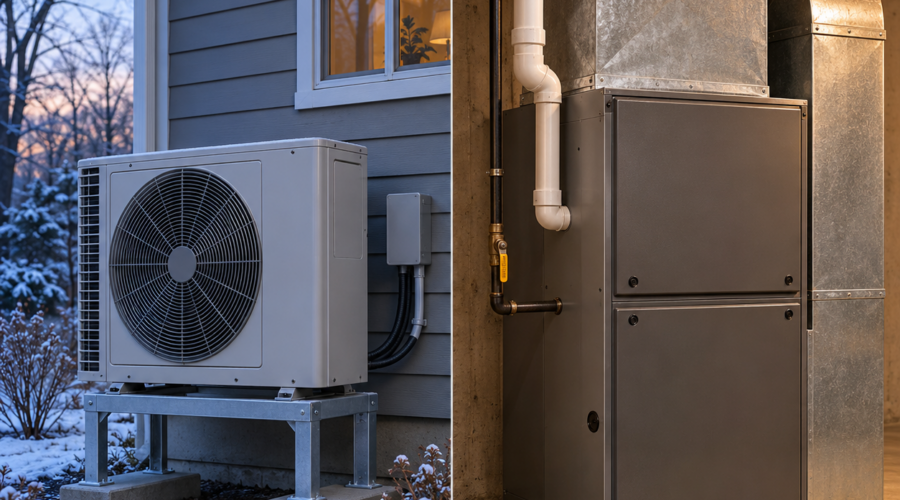
A dual-fuel, or hybrid, heating system combines an electric heat pump with a furnace that burns natural gas, propane, or oil. The heat pump can provide heating in suitable conditions, while the furnace can take over when the system's controls call for it. The exact sequence depends on the equipment pairing and how it was configured.
This is different from a heat pump with electric resistance backup. Thermostat labels such as "Aux Heat" and "Emergency Heat" do not always identify the heat source on their own. Check the equipment documentation or ask the installer which source those indicators refer to. For a broader comparison of system types, see our guide to heat pumps and furnaces in New York.
What affects when the furnace takes over?
Several factors can shape the changeover point. A qualified installer can explain which ones matter to your specific system.
| Factor | Why it matters | What to ask |
|---|---|---|
| Heat pump capacity in cold weather | A model's heating output and efficiency vary with outdoor conditions. Its published performance at colder temperatures is more useful than a single general rating. | What capacity does this model provide at the outdoor temperatures used in the home's design? |
| Home heating load | Insulation, air leakage, windows, room layout, and local design conditions affect how much heat the home needs. | How was the home's heating load calculated, and where does it compare with the heat pump's capacity? |
| Thermostat and system controls | The thermostat, outdoor temperature sensor, and equipment controls determine how a call for heat is handled. | Which device makes the changeover decision, and how can I tell which heat source is running? |
| Energy prices and operating cost | The relative cost of electricity and fuel can influence an economic changeover setting. Rates and equipment performance can change over time. | Were current utility rates and model-specific performance used in the operating-cost comparison? |
| Defrost and recovery behavior | Defrost cycles and recovery after a thermostat setback can affect short-term operation. Control strategies differ between systems. | What should normal defrost and recovery look like for this installation? |
For more on heat pump performance during cold weather and defrost cycles, read why a heat pump may run in cold weather.
What homeowners can observe safely
- Check the regular thermostat display. Note its mode, displayed outdoor temperature if available, and any heat-source indicator. Names and symbols vary by thermostat.
- Record when the system changes over. Note the approximate outdoor conditions, indoor comfort, and whether the change happens repeatedly. These details can help a technician assess the controls.
- Use the normal schedule and setpoint controls only. Do not adjust installer lockouts, compressor cutoffs, changeover temperatures, or wiring to test how the system responds.
- Keep access and airflow areas clear. Follow the manuals for the outdoor heat pump and indoor equipment. Do not remove furnace panels, reach near a fan, or work on electrical or fuel components.
Questions to ask the installer
- What changeover temperature or control condition is configured, and why was it selected for my home?
- Is the setting based on equipment capacity, estimated operating cost, or another design requirement?
- Does the heat pump stop when the furnace operates, or is another sequence specified for this equipment pairing?
- Which thermostat message or indicator shows that the furnace has taken over?
- How does the system handle defrost, a large recovery demand, and a very cold-weather period?
- Can the changeover setting be updated if fuel or electricity prices change, and who should make that adjustment?
- Which maintenance visits are needed for the heat pump and the furnace, and what is included?
When comparing installation proposals, ask for the load calculation, model numbers, cold-weather performance, control sequence, and backup-heat plan in writing. Our heat pump sizing and estimate checklist has more questions for comparing proposals.
When to arrange service
Contact a qualified HVAC professional if the system repeatedly switches in a way the installer did not describe, the home loses comfort during changeover, the furnace fails to start, or the heat pump runs without maintaining the expected temperature. Avoid diagnosing the cause from one cycle. For a furnace that is not heating, see our safe furnace troubleshooting guide.
A dual-fuel system has both heat-pump and combustion equipment to maintain. Follow each manufacturer's service schedule and ask the installer to confirm that the controls, safety devices, and changeover sequence are checked during professional maintenance.
Frequently asked questions
At what temperature does a dual-fuel system switch to the furnace?
There is no single temperature for every system. The changeover depends on equipment performance, the home's heating load, controls, design choices, and sometimes current energy prices. Ask the installer to explain the setting for your system.
Does the furnace always cost less to run in colder weather?
Not always. The comparison depends on local electricity and fuel rates, the heat pump's performance at that temperature, furnace efficiency, and the home's heating demand. Request a comparison based on your actual equipment and utility rates.
Can the heat pump and furnace run at the same time?
The intended sequence varies by equipment and control design. Many dual-fuel systems are set up to select one primary heat source at a time, but homeowners should confirm the specified sequence with the installer rather than assume it.
Is "Aux Heat" always the furnace?
No. On some heat pump systems, auxiliary heat refers to electric resistance heat. Thermostat terminology varies, so check the equipment documentation or ask which source each indicator represents.