No products in the cart.
Quick answer
Longer run times and brief defrost cycles can be normal
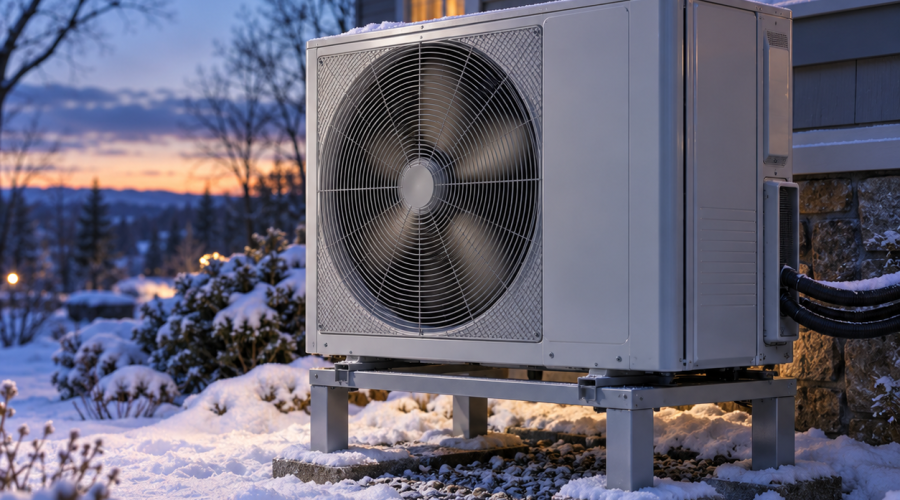
As outdoor temperatures fall, a heat pump may need to run longer to meet the home's heating demand. In cold, damp conditions, frost can form on the outdoor coil and the system may briefly enter an automatic defrost cycle. The exact operating range and cycle behavior depend on the equipment, so judge it by the manufacturer's guidance and whether the home stays comfortable.
A heat pump running on a cold day is not automatically a sign of trouble. Air-source heat pumps move heat between indoors and outdoors, and their available heating capacity and efficiency generally change as the outdoor temperature drops. Modern cold-climate models are designed for colder conditions, but no single temperature or run-time rule applies to every make and model.
Winter operation
Why a heat pump may run for longer in cold weather
When it is cold outside, a heat pump has less heat available to collect from the outdoor air, while the home may also be losing heat faster. The system can respond with longer or more frequent cycles. That can be ordinary operation if the indoor temperature remains near the thermostat setting and the equipment otherwise behaves as expected.
A longer run by itself does not show whether a system is working correctly. If it runs almost continuously but cannot keep the home comfortable, or its behavior has changed noticeably, arrange a check. Model, installation, home insulation, airflow, thermostat settings and outdoor conditions all matter. Our overview of heat pumps and furnaces in New York explains why cold-weather performance varies between equipment and homes.
Automatic defrost
What happens during a heat-pump defrost cycle?
In heating mode, the outdoor coil can become colder than the surrounding air. When moisture in the air freezes on the coil, the heat pump's controls may start a defrost cycle to clear that frost. Many systems temporarily change how the refrigeration cycle operates to warm the outdoor coil. The outdoor fan may pause, and the indoor system may adjust airflow or use supplemental heat, depending on its design.
You might hear a change in sound, see water draining below the unit, or notice a brief cloud of water vapor as frost melts. A light coating of frost that clears during normal operation is not, by itself, proof of a problem. Defrost timing and duration vary by system and conditions; there is no universal interval that every homeowner should expect.
Thermostat indicators
Auxiliary heat and emergency heat are different
Auxiliary heat is backup heat that some systems can bring on automatically when extra heat is needed, including during especially cold conditions or certain defrost cycles. Seeing an AUX or AUX HEAT indicator occasionally can be part of normal operation. If it stays on much more than usual, check the system instructions and ask a heat-pump technician what is expected for your model and weather.
Emergency Heat is a thermostat mode found on some systems. It often relies on backup heat while limiting or disabling the heat pump, but the exact controls depend on the installation. It is not a setting to use as a routine way to stop a normal defrost cycle. Follow the thermostat and equipment manuals, or ask the installer before changing modes.
Know what to watch for
Which winter behaviors are typical, and which need attention?
| What you notice | What to do |
|---|---|
| Longer cycles, with the home staying near the set temperature | Can be normal in cold weather. Observe whether operation matches the system's usual pattern. |
| A light frost layer, brief fan pause, or water vapor during defrost | May be normal. Let the automatic cycle complete and follow the manufacturer's instructions. |
| Heavy ice that remains or keeps building after defrost | Arrange professional service. Do not chip the ice, pour hot water on the unit, or open the cabinet. |
| The home cannot reach its set temperature, or the system repeatedly stops and restarts | Record the conditions and contact a qualified heat-pump technician, especially if this is new behavior. |
| An error code, repeated breaker trip, or unusual grinding, scraping or electrical noise | Keep clear and arrange service. Do not repeatedly reset a tripping breaker or investigate inside the unit. |
Low-risk observations
What you can check without opening the equipment
- Confirm the thermostat is set to Heat and note the displayed temperature and any AUX or error indicator.
- Look from a safe distance to see whether snow, leaves or other debris are blocking the outdoor unit's airflow. Keep clearances specified by the manufacturer; do not pile snow against the cabinet.
- If your system has a homeowner-accessible air filter, check and replace it only as directed for that equipment. Our guide to choosing an HVAC filter covers common selection questions.
- Note outdoor conditions, how long the behavior lasts, whether the home stays comfortable, and any displayed code. This helps a technician understand the pattern.
If the heat pump runs but some rooms remain uncomfortable, the cause may involve distribution, insulation or the home as well as the equipment. See our guide to uneven temperatures between rooms for other factors to note.
Prepare for service
What to tell a heat-pump technician
Share the model number if it is visible without removing a cover, how long the system has behaved this way, the outdoor conditions, whether the indoor temperature holds, and what you see during a defrost cycle. Mention AUX indicators, error codes, unusual sounds, heavy ice or recent changes to the thermostat. Ask whether the provider services your specific model and what the diagnostic visit includes.
For broader seasonal steps, including thermostat, filter and airflow checks, see our New York heating-season preparation checklist.
Buffalo directory
A heat-pump directory profile to verify
ABV lists T-Mark Plumbing, Heating, Cooling & Electric under Heat Pumps in the Buffalo area and describes heating and HVAC services. The directory marks this profile not verified, so treat it as a starting point, not an endorsement or confirmation that the business services every heat-pump model or defrost issue.
Buffalo, New York
T-Mark Plumbing, Heating, Cooling & ElectricView the ABV directory profile →
Confirm the provider's service area, experience with your make and model, qualifications for the work, availability, fees and diagnostic scope before booking.
Common questions
Heat pumps in cold weather: FAQs
Is steam or vapor from the outdoor unit normal?
A brief cloud of water vapor can appear when frost melts during defrost. If you see smoke, smell burning, or notice sparks or electrical arcing, keep away and seek appropriate help.
How often should a heat pump defrost?
There is no single schedule for every system. Controls, model, humidity and outdoor conditions affect when defrost occurs. Check the owner's manual or ask a technician about your equipment.
At what temperature should my heat pump stop running?
There is no universal cutoff. Operating limits and heating capacity vary by model and installation. Consult the manufacturer's specifications for your unit rather than relying on a general temperature.
Should I turn off the heat pump while it defrosts?
Usually, allow the automatic cycle to finish rather than interrupting it. If the unit is heavily iced, not restoring heat, or displaying a fault, follow the manual and contact a professional.
Is an AUX HEAT light always a sign of a problem?
No. Supplemental heat may operate automatically in cold conditions or as part of the system's controls. If it runs much more than usual or the home is not warming, ask a technician to check the system.